Why Do We Keep Having the Same Fight Over and Over Again?

Updated: Oct 14
Why Do Couples Keep Having the Same Fights?
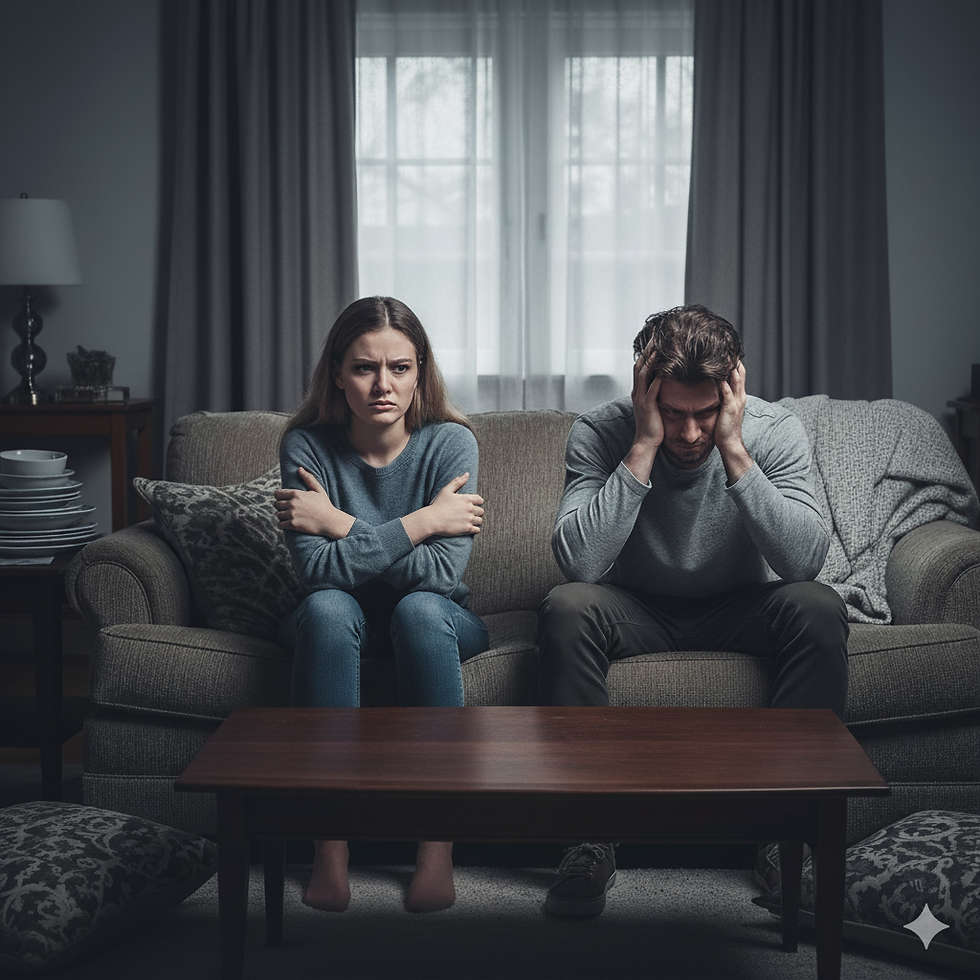
In partnership, we're unconsciously trying to make each other our "primary attachment figure," the person we can depend on the most. So any indication that we can't depend on them, or can't trust them to be there for us, triggers a big reaction.
As you attempt to build real security, it's like doing a simultaneous trust fall. When your partner doesn't follow through on something they said they would do, you're dropped. So you're learning how to open your heart and hold each other's with care.
It's not about the dishes or the socks on the floor, or different styles of parenting or communication… it's what certain things represent. Dr. Sue Johnson, founder of Emotionally Focused Couples Therapy, taught us that when you can't rely on your partner in the little moments, your attachment system is always unconsciously probing:
"Can I rely on you when it really counts?"
"Do I matter enough to you to get your attention?"
"Are you really there for me when I need you?"
"Can I trust you to turn towards me instead of away when it's hard?"
That's why you keep having the same fight. "Small things" spiral into "big fights" because they trigger our attachment system. Both partners need to learn to attune to each other emotionally and be able to offer reciprocal empathy for each other's pain.
Why Does Everything Turn Into an Argument?
Because when you get hurt, most partners become self-absorbed and slip into what I call the parallel monologue:
Two speakers, no listener.
Demanding to be understood first: "You hurt me. You should understand me and my pain!"
Both fighting to exist and to have their pain and perspective understood, over empathizing with the other.
Conflict escalates when you invalidate each other's pain with explanations like, "If you saw it my way, you wouldn't feel that way. You're overreacting. I disagree. You're wrong, I'm right."
Conflict is when you had two different experiences of the same event, so it helps to focus on validating each other's subjective experience rather than having "Objectivity Battles."
Both partners need to work through their resistance to empathizing with each other.
How Do You Actually Stop Escalating Fights?
Step one: take turns. One person is the Speaker, the other is the Listener.
The Speaker shares what hurt, slowly, one drop at a time.
The Listener puts aside their perspective temporarily and joins their partner's subjective world.
This can feel challenging at first. Once you recognize that the only way to truly create mutual understanding is taking turns, though, you save a ton of time. When you get hurt or triggered, you need structure that acts as guardrails for your conversation, so you stop spiraling into reacting to each other's reactions.
De-escalation = Empathizing with their subjective experience.
Escalation = Reiterating your point of view over and over.
This is exactly what I practise live with couples in sessions, because learning to do it in the heat of a real conflict, with support, is very different from reading about it.
Want to learn more about my approach? Watch my 12-minute video here.
What Is Validation in a Relationship?
Validation is not saying, "I understand." Those words rarely help anyone feel understood.
Validation is demonstrating that their perspective makes sense from inside their world.
It's walking into their House of Understanding on the other side of the street. From your porch, it looked one way, but from theirs, it looked completely different.
Empathy is saying:
"From your side of the street, I can see how it felt scary, disrespectful, etc., because _______."
If you're unable to empathize with them because you genuinely can't comprehend their point of view, get curious!
Empathy requires checking assumptions and sustained curiosity until you birth new understanding together.
The goal is to be able to elaborate and explain your partner's point of view better than they can themselves. Think out loud what they would be thinking.
Validation has nothing to do with right vs wrong. It's simply explaining, from their point of reference, their subjective experience of reality from the inside out.
How Do You Share Your Feelings Without Triggering Defensiveness?
We typically want to share our feelings because we were hurt in some way. A helpful way to do that is to ask for consent first. Creating shared language that works for both of you is important, so you can cue each other for a "repair conversation," "feedback," "sharing a concern," etc. Without shared language, your pain or concern will often come out as an accusation.
When we get hurt, there are usually layers to our pain, and we need that pain to be empathized with by our partner. We need them to understand how they hurt us. It wouldn't make sense to stay in a relationship where you keep getting hurt and your partner doesn't really get how, or how bad, or what it's like to be you.
So how you share your pain is very important, otherwise you risk overloading your partner or triggering their defensiveness. Think of sharing pain like combining an acid and a base in chemistry:
When both of you dump 5,000 litres of each at once, it explodes. (Both trying to have your pain understood at the same time rarely works.)
When you use a dropper, one drop of pain at a time, it slowly neutralizes until you dissolve the entire solution without any explosion.
Conflict resolution works the same way. Instead of venting just to get it out, slow down. Share one drop and create understanding as a team:
"What hurt?"
Empathize with one drop.
Repeat layer by layer, drop by drop.
Pain is neutralized with empathy, but you can't expect your partner to be able to empathize with all of your pain (which is in layers anyway) in one go. When you approach this process extremely intentionally, you can actually experience true resolution.
Why Does My Partner Take Everything as an Attack?
Because they're protecting their "good person" identity. To them, taking accountability feels like admitting they're bad. Most people mistakenly assume "I'm sorry" = "I did something wrong."
That's why you need to shift from fault → impact. It's not about who's right vs wrong, it's about acknowledging the impact you have on each other, even when you didn't mean to hurt each other.
You rocked the canoe and they fell in the water. You didn't mean to. You're not a bad person. But they're still wet, and their pain still matters, even though you didn't mean to hurt them.
Accountability isn't about fault. It's about acknowledging impact without shame or judgment.
So you need to work on sharing, "Here's how you hurt me," without making it an accusation. "You hurt me" implies they're the villain who did the hurting, so they immediately need to defend themselves.
Instead, you can massage their ego: "I know you didn't mean to hurt me, and I know and trust you're a good person. Here's the story I'm making up, here's how I interpreted things, here's what wasn't okay with me. Could you try empathizing with my subjective experience, please?"
I go deeper into this in Why Does My Partner Get So Defensive When I Try to Talk About Our Problems?
What Does Repair Actually Mean in a Relationship?
Repair isn't, "Sorry, I get it. Can we move on already?"
Repair is the healing of emotional wounds, such that their charge dissolves completely, so the pain that was in the way of the natural flow of energy between you is resolved and a felt sense of connection is restored.
Repair happens when you fully join your partner in their experience, when you demonstrate your understanding of their pain by speaking from their perspective so clearly that their nervous system relaxes, because they feel you get what it's like to be them. Once that happens, there's no more need to have the pain seen, heard or understood, so it dissolves and connection is restored.
Sometimes it takes a lot of slow, layer-by-layer validation to get to the "Oh My God, Yes" experience, when your partner's nervous system can finally relax because they feel seen all the way through.
When you are able to articulate better than your partner can themselves what it was like to be them, that's true resolution. It's a felt sense, and you'll know when you get there, when your partner says:
"Yes. That's exactly what it was like."
"You get it. Finally! Thank you!"
Should You Problem-Solve Right Away?
No. That's the trap. Making it better or "fixing it" is usually invalidating and creates more upset.
Most couples try to fix the issue before they feel connected, but you can't solve problems from opposite teams. You need to reconnect emotionally first. Then, once you both feel deeply understood, solutions tend to come naturally.
What Is the Deepest Level of Empathy?
It's when you can speak as your partner, explaining their point of view better than they can themselves. When you do that, there's nothing for them to argue against.
"If I were you, here's how I'd feel… here's why it would hurt."
Empathy does not mean you agree. You do not need to prove you're a good partner or defend your good person image. Empathy is not explaining your point of view, and it's not relating to their experience from your own. The empathy that heals is actually inhabiting their world long enough to describe it better than they can.
Remember, empathy is exiting your reality and entering theirs, and that takes some practice at first. It means being able to think as them, to leave your House of Understanding and cross the street into theirs.
That's the level of empathy that transforms not just fights, but your entire relationship.
FAQs About Conflict Resolution in Relationships
Why do couples fight so much about small things?
Everything feels unfair when there's a lack of connection and security: broken trust, fear of being left, a shaky, insecure foundation. When you create real security, little things stop turning into big things, because you know you can rely on each other for reciprocal empathy.
What is the #1 tip for resolving conflict in marriage?
Stop the Objectivity Battles. Take turns empathizing with each other's subjective experience.
How do I stop getting defensive with my partner?
Shift from explaining your good intentions to empathizing with impact. You're a good person, you didn't mean to hurt your partner, and you hurt your partner.
What does real repair look like?
Repair is slow, and requires empathizing with layers and layers of pain, one partner at a time, until both partners feel a full "Oh My God, Yes" moment of being completely seen in their subjective experience.
Is conflict normal in healthy relationships?
Yes. The problem isn't conflict itself, it's unresolved pain. Repair is the process of resolving the pain between you so that it doesn't keep compounding.
Final Takeaway
You don't need more "communication skills."
You need emotionally corrective experiences, moments of deep empathy where defensiveness and resentment melt and intimacy returns.
Couples are often surprised when they have the experience of actually feeling understood for the first time, or of feeling understood by their partner in a whole new way. Many of them didn't really believe it was possible, which is why they'd come so close to losing hope. So it's important to know that it is possible. You do need to learn the skills that get you there and work through the resistance that's in the way, because the truth is, even with the skills, it's hard.
Even after years of profound pain and resentment, I've seen partners find their way back to each other once they learn this process.
You deserve a relationship where conflict brings you closer, not further apart. Let's build that together.
Want support with this in your relationship? Reach out to work with me.
Related Reading
Why Does My Partner Get So Defensive When I Try to Talk About Our Problems?
Why Do I Take Things So Personally? Shame, the Inner Critic and Defensiveness in Relationships
Sex & Intimacy in Couples Therapy: Why Desire Shuts Down and How Couples Become Lovers Again
Should I Stay or Should I Go? When Your Relationship Feels This Hard


